

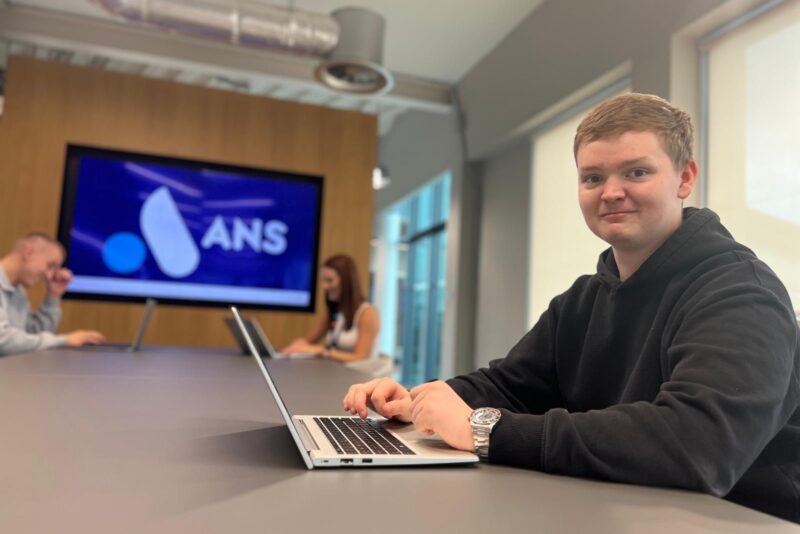
Deciding the best path to take after GCSEs is not always a straightforward choice. For those eager to get stuck in with hands-on learning, an apprenticeship offers the guidance and opportunity to start building a career from day one.
For Callum Duncan, leaving school at 16 led to real-world responsibility and a clear route into cyber security. His experience as an Associate Security Analyst whilst studying at the ANS Academy hugely shaped his future career prospects. Today, he shares his experience of the ANS Academy and what it is really like to start a career straight after school.
Why did you choose to leave school after GCSES?
“I’ve always been interested in technology. I found that working on my own side projects and hobbies when I was young was a great way to get more into tech. But after my GCSEs, I knew my skill set wasn’t quite right for A Levels. And the things I did want to learn about, like cyber security, I wasn’t going to find very much of in a textbook. I felt like I needed to be around more people who were interested in the same things as me, so I started looking at options other than school.”
What attracted you to studying your apprenticeship?
“I did a week of work experience at ANS when I was in Year 10, and found myself surrounded by the kind of community I’d been looking for. During that week, I got to speak to people who had been through the ANS Academy and completed an apprenticeship. I could see myself exactly in their shoes, and they became the reason I was 100% set on going down this path. The quick progression and hands-on learning they described were exactly what I was looking for.”
Apprenticeships fell out of favour over the last 30 years as parents looked to universities, but that’s changing now as they are firmly back in fashion as a great way to launch a career. How do you feel about that change?
“For me, I see apprenticeships as a way to get started on your career earlier, learn more, and progress faster. I don’t know what opportunities you get at university or in your A Levels, but in my apprenticeship, I got to form relationships with people with unbeatable experience and know-how. If you know what you’re interested in and what you want to do, apprenticeships get you doing it a couple of steps quicker.”
What does a typical day involve?
“At ANS Academy, I always felt like a crucial part of the team, rather than an intern running for coffee orders. We spent most of our time completing our job responsibilities like anyone else in the business, and the remaining time we spent on more traditional study.
I rotated through teams in the Academy so I could get a taste for a range of roles. When I was on the security team, a usual day in the office would start with a team call to discuss what happened yesterday and what we’re all working on today. I’d work through any tickets from customers, before heading out for lunch with my team in Manchester. In the afternoon, I’d often have customer calls. As their main point of contact in the team, I was able to work up to running these myself.
In the office, I’d sometimes be manning the ANS reception desk too – which all the apprentices get the chance to do. It helps us meet people, become more confident, and learn more about the business than most employees would usually.
On a study day, I’d start the morning by going over coursework and other activities with our trainer. Although we’d left school, ANS apprentices still do PSHE to make sure we’re in the best position mentally and emotionally for adult life. I’d also have calls with different people from across ANS, to learn about all aspects of the business. We complete coursework for eight modules in the Academy, so I’d be working on those too during the day. Training sessions on the assignments, and quick turnaround for feedback which we chat through with our trainer are some of the reasons so many ANS apprentices get Distinctions.”
What kind of qualities do you need? And any specific qualifications?
“In my experience, getting an apprenticeship is definitely more about your qualities than your qualifications. There are only so many accreditations that a 16-year-old can have anyway, so it’s much more important to think about what sets you apart in your attitude.
There are three qualities which I would say a really good apprentice will have: interest, passion, and the ability to push yourself. Apprentices have access to invaluable experience in their colleagues, so they need to have the desire to learn as much as possible – or it’s wasted.”
What are the best things about the job?
“Going into my apprenticeship, I thought the best thing about it would be becoming part of a community of people my age, who were interested in the same things. This was definitely a really important part for me, but overall I think the opportunities you get in an apprenticeship are unbeatable for young people.
I’ve always hated public speaking, but I recently spoke in front of the entire company to discuss what my team had been working on. There aren’t many other ways that 18-year-olds get the experience of presenting in front of over 700 people. Another big benefit is getting your foot in the door at age 16, and earning a valuable qualification whilst doing so.”
And what are the most challenging?
“I struggled with this question, because it’s quite hard to pick out something that’s challenging when I enjoyed my apprenticeship so much. Including the tricky bits. At the start of my apprenticeship, I did find it slightly daunting to enter my cohort as one of the youngest. I also had zero job experience – most people’s first job isn’t as an Apprentice Cloud Engineer.
I went off for a week of leave very early on, and came back worried that I was going to be miles behind everyone else. But the level of support available from both my team and the Academy coordinators quickly dispelled any worries I had.”
What would you say to someone reading your article today and considering taking an apprenticeship?
“In my experience, speaking to people who’ve completed an apprenticeship is the best way to work out if it’s for you. Get on LinkedIn and find some people who have done an apprenticeship in the area you’re interested in – chances are they’ll be happy to answer your questions.”
And what advice would you give to people who want to get an apprenticeship?
“If you’re already interested in apprenticeships, the next step is to work out what will set you apart. Are there projects you can work on, books you can read, or challenges you can set yourself which show that you’re ready to enter the world of work?
No one really likes completing job applications or doing interviews. But at 16, I had no clue what I was getting myself into. For the ANS Academy, the assessment centre day was relaxed, and I quickly realised that everyone else who had applied was in the same boat as me. Be yourself, demonstrate your passion, and show that you’re ready for the next step.”
Why did you stay at ANS?
“When apprentices graduate from the ANS Academy, we have the opportunity to apply for the jobs which are available. For me, it was a no brainer to apply. ANS provided the environment I needed as an apprentice to push myself as far as I wanted, and I knew that that wasn’t going to end once my apprenticeship was done.
I was fortunate enough to be offered two roles, and I chose to become an Associate Security Analyst, having been able to build on my passion for security during my apprenticeship.”
And please feel free to add anything else you’d like to get across to readers.
“Starting a corporate apprenticeship at 16 means you’ll be solving problems and managing relationships that other people your age might not be encountering. Support will be widespread, and your apprenticeship coordinators have a responsibility not to put you in any uncomfortable positions. It’s not for everyone, but you might have more maturity, resilience, and confidence than you think.”
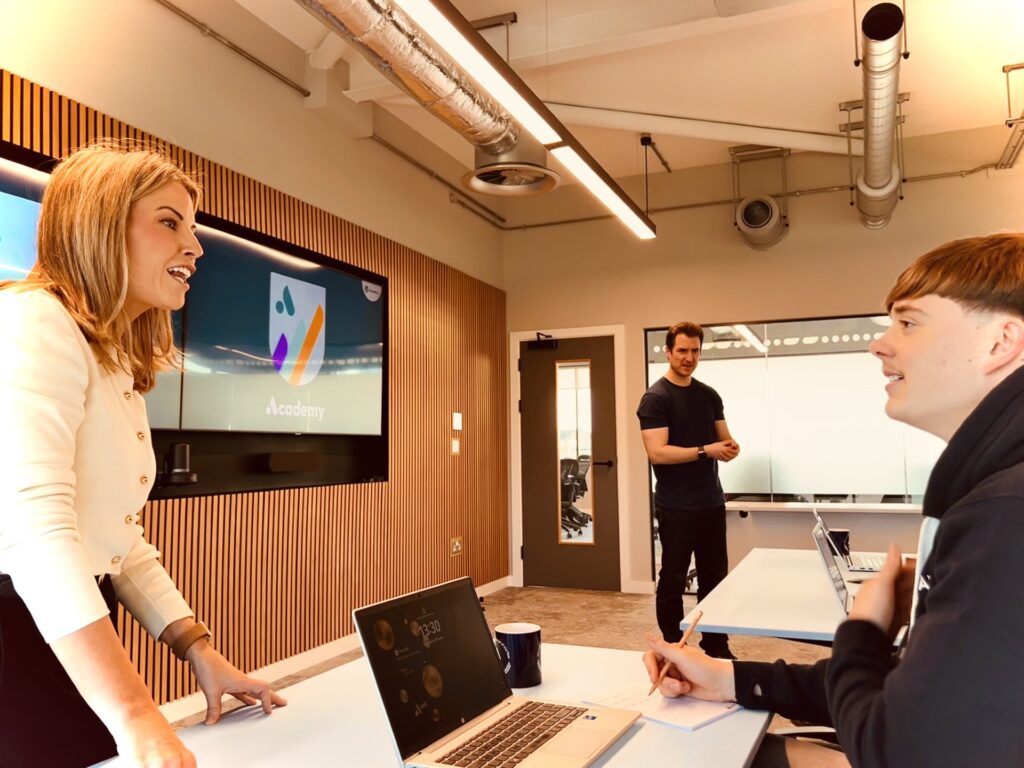
Arlene Bulfin, Director of People Development, ANS, said:
“ANS Academy has been delivering apprenticeships in the North West for the last 13 years. Since then, we’ve seen a steady increase in applications from school leavers after GCSEs, but the number of 16-year-old applicants is still quite low. The largest increase we’ve seen in applications has come from older candidates, including university graduates and career changers.
“Our apprenticeship brand has come a long way. People from all walks of life are realising that good quality apprenticeships can open doors and give people incredible real-world opportunities.
“Entering the workforce at 16 or 17 gives young people a massive step up on the career ladder. Getting into your desired field at that age and being exposed to on-the-job learning puts you years ahead of your peers who choose to go to college and then university.
“But it’s not without its challenges. At 16, you need to have well-rounded skills to enter a professional environment. The 16-year-olds we have hired over the years have been pretty special. They need to be resilient and mature, have excellent communication skills, and a lot of confidence. We’re bringing them into an adult world, and they need to be mature enough to manage workloads and apprenticeship deadlines.”
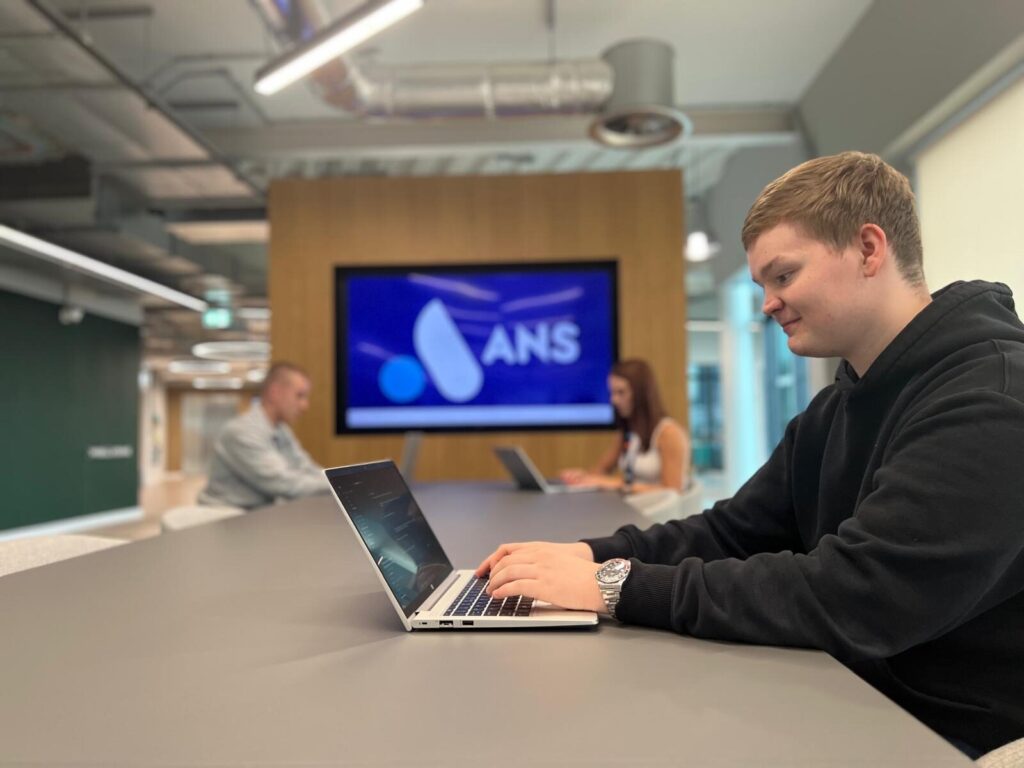
Richard Thompson, CEO of ANS, said:
“At ANS, we’re not just creating a tech movement, we are growing and developing exceptional teams in an environment that allows them to thrive. Early careers is at the heart of this mission, especially as we look toward a future driven by technology. Our apprentices are integral to our team. Their career progression opportunities are limitless, supported by a company-wide culture of continuous development and industry-leading expertise.
“The North West is one of the UK’s fastest growing tech hubs, but as a region we need to be doing more to upskill our young people and bridge the technology skills gap. That’s where the ANS Academy comes in. It provides an opportunity for anyone to start a career in tech, enabling us to attract diverse talent from different backgrounds. Thanks to the Academy’s success in nurturing our own talent pipeline, we launched the ANS Academy-as-a-Service, creating opportunities and developing talent for our customers.
“School leavers like Callum are the reason we set out on our mission to make technology accessible to all. We want to ensure the next generation is AI-ready, and equipped with the tools they need to take the UK into the future.”
Callum’s story shows that there’s more than one way to build a successful career. Through gaining immediate learning in the workplace, he has built confidence, a key skill set, and direction at a young age. His experience highlights how the right support and environment can make an apprenticeship a strong alternative to the traditional route.
If Callum’s journey has got you interested, visit the ANS Academy page to explore our apprenticeships and early careers opportunities, and see how you could start your future in tech.